A basement can become the room everyone fights to use, not the space everyone forgets exists. The right Basement Bar Area turns square footage under your main floor into a social spot with purpose, comfort, and enough flexibility for game nights, birthdays, football Sundays, and quiet Friday evenings. Many American homes already have the shell for it: open floor space, privacy from bedrooms, and enough distance from the kitchen to make the room feel like a getaway. What separates a good setup from a cramped corner is planning. A bar that looks sharp but blocks traffic will annoy you by the third weekend. A layout that ignores lighting, storage, and seating will feel half-finished no matter how much you spend. For homeowners mapping out better entertainment space upgrades, the smartest move is to design around how people gather, move, talk, and relax. Style matters, but flow wins first.
Plan the Basement Bar Area Around Movement, Not Decoration
A basement bar fails fastest when it looks good in photos but feels awkward in real life. People need room to walk behind stools, open a mini fridge, pass snacks, reach the bathroom, and drift toward the TV without creating a traffic jam. That is why layout comes before finishes. A great lower-level bar acts like a social anchor, not a wall across the room.
Why a Home Bar Layout Should Start With Clear Walking Paths
A smart home bar layout begins with the boring stuff: clearance, corners, and the path people naturally take when they enter the basement. Ignore that path and guests will cut through the wrong zone all night. You will see it in small ways, like someone squeezing behind stools with a plate in one hand and a drink in the other.
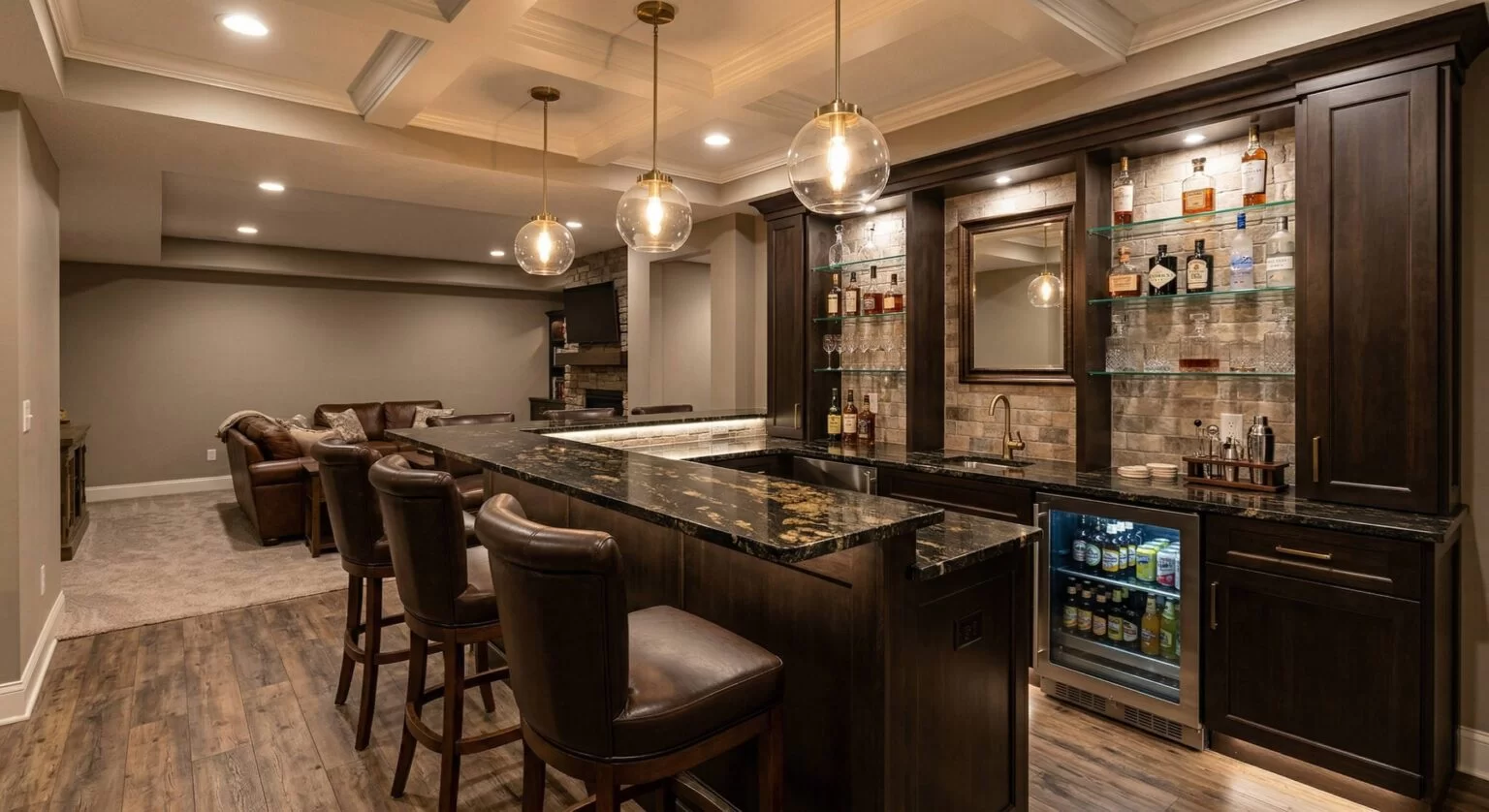
Most U.S. basement rooms work best when the bar sits along a wall, in a corner, or behind the main seating zone. A wall bar saves floor area and keeps the center open for couches, a pool table, or a kids’ hangout zone during family weekends. A corner bar gives you more counter length without taking over the entire room.
The counter should never trap the host. Leave enough working space behind it for opening cabinets, loading an ice bucket, and moving between sink, fridge, and shelves. A bar that forces you to turn sideways every time you grab glasses will feel cheap, even with expensive stone on top.
How Traffic Flow Shapes Better Basement Entertainment Space
A strong basement entertainment space lets people gather without forcing every activity into one tight cluster. The bar can sit near the TV zone, but it should not block the screen or split the seating. If guests must walk between the couch and television every time they need a drink, the room will feel busy in the worst way.
Think about the basement like a small neighborhood. The bar is one stop, the seating area is another, the game table is another, and the bathroom path matters more than you think. Each stop should connect without crossing through the middle of another activity. That is how the room stays relaxed when ten people show up.
A real example helps. In a split-level home in Ohio, a narrow basement bar along the stair wall can keep the main floor open for a sectional and dartboard. That same bar placed across the back wall might look grand, but it could force every guest to walk through the TV area. The smaller placement works better because it respects movement.
Build Storage and Function Into the Bar Before Choosing Finishes
After the layout works, function has to carry the design. A basement bar needs more than a nice counter and a few shelves. It needs places for glassware, paper goods, mixers, snacks, cleaning supplies, trash, and backup drinks. Storage is not the glamorous part, but it is the part that decides whether the room stays clean after the first month.
Wet Bar Ideas That Make Hosting Less Messy
Good wet bar ideas start with the sink. A small sink may feel optional until you host once and carry sticky glasses upstairs all evening. Even a compact bar sink changes the room because cleanup happens where the mess starts. That matters in basements, where stairs make every small chore feel bigger.
A wet bar also needs a landing zone beside the sink. You need counter space for rinsed glasses, a cutting board, or a tray of lime wedges. When the sink sits jammed between a wall and a fridge, the setup looks complete but works poorly. A few extra inches can save the whole experience.
Plumbing costs vary across the U.S., especially when drains sit far from an existing bathroom or utility room. In many homes, placing the bar near a laundry area or basement bathroom can reduce the work. You should still check local code and permit rules through your city or county office before cutting into walls or floors, especially if electrical and plumbing changes happen together.
Small Basement Bar Storage That Does More With Less
A small basement bar has to be honest about what it can hold. You may not need a full wall of cabinets if you mostly serve soda, coffee, wine, and snacks. A base cabinet, mini fridge, open shelf, and one tall pantry cabinet can handle more than people expect when each piece has a clear job.
Vertical storage often beats wider storage in tight basements. Floating shelves can hold glasses and display bottles without stealing floor area. A narrow pullout cabinet can hide napkins, stirrers, bottle openers, and cleaning wipes. That tiny detail prevents the counter from becoming a junk drawer with a faucet.
The counterintuitive move is to leave some empty space. Many homeowners fill every inch with cabinets, then wonder why the room feels heavy. Open wall space around a compact bar lets lighting, art, and the backsplash breathe. Small rooms need restraint more than they need more boxes.
Use Lighting, Seating, and Materials to Set the Mood
A bar becomes inviting when the room feels good after sunset. Basements rarely have generous natural light, so the mood depends on fixtures, surfaces, and seating comfort. This is where design earns its keep. The room should feel warm, not cave-like; polished, not fragile; grown-up, not stiff.
Lighting Choices That Make a Basement Entertainment Space Feel Alive
A second use of basement entertainment space thinking starts with layered lighting. One ceiling light in the middle of the room will flatten everything. It creates shadows behind the bar and makes the seating area feel like a waiting room. Basements need light at different heights.
Pendant lights over the counter give the bar a clear identity. Under-shelf lighting helps glassware glow without shouting. Recessed lights can fill the room, but dimmers are the detail that changes everything. Bright light works for cleaning and board games. Softer light works for movies and late-night conversation.
Warm bulbs usually suit basement bars better than cool white bulbs. Cool light can make stone, tile, and painted cabinets feel harsh underground. Warm light softens hard surfaces and makes wood tones richer. That one choice can make a modest bar look far more finished than its budget suggests.
Seating That Keeps Guests Comfortable Past the First Drink
A strong seating plan respects bodies, not catalog photos. Bar stools need the right height, foot support, and enough elbow room. Crowding four stools into a counter that fits three will make the room look lively before guests arrive, then uncomfortable once they sit down.
Backed stools work better for long hangouts than backless stools. Backless stools tuck away nicely, but they are not kind during a three-hour playoff game. In many suburban basements, the best setup is a mix: a few comfortable stools at the bar and a deeper seating area nearby.
Material choice matters because basements deal with moisture, spills, and heavy use. Quartz, sealed butcher block, porcelain tile, luxury vinyl plank, and washable upholstery all make sense in different homes. Marble may look rich, but it can stain and etch under citrus, wine, and cleaning products. The prettiest choice is not always the smartest one.
Add Personality Without Turning the Room Into a Theme Park
Once layout, storage, lighting, and seating work, personality can enter the room. This is the fun part, but it needs discipline. A basement bar should feel personal without becoming a sports shrine, faux pub, or movie set that gets old in two years. The best rooms give guests something to notice, then let the night take over.
Small Basement Bar Details That Make the Room Feel Custom
A second mention of small basement bar design belongs here because details carry compact spaces. A bold backsplash, framed local map, built-in bottle rail, or custom sign can make a short counter feel intentional. You do not need a huge footprint to create a room with memory.
Local touches often beat generic decor. A Detroit homeowner might frame vintage auto prints. A Nashville family might use warm wood, album art, and brass fixtures. A Colorado basement might lean into stone, leather, and mountain photography without turning the room into a lodge cliché.
One unexpected trick is to design one “conversation wall.” This could be shelves with glassware, a textured tile wall, or a display of local brewery cans collected over time. Concentrating personality in one area keeps the rest of the room calm. Spread too many accents around and the basement starts to feel noisy before anyone arrives.
Wet Bar Ideas for Multi-Use Family Rooms
A second round of wet bar ideas should consider families who need the basement to do more than serve drinks. Many homes use the same room for movie nights, kids’ sleepovers, holiday overflow, and casual meals. A bar that only supports cocktails wastes potential.
Add a coffee station, snack drawer, microwave niche, or undercounter beverage fridge and the bar becomes useful every day. Parents can set up popcorn during a movie without running upstairs. Teens can grab drinks during a game night without raiding the main kitchen. Guests can help themselves during holidays without crowding the host.
This is where the Basement Bar Area earns long-term value. It should not sit unused until adults come over on Saturday. It should support the way your household actually lives during an ordinary week. The more daily uses it has, the less it feels like a luxury add-on and the more it becomes part of the home.
Conclusion
A basement bar should make the lower level feel easier to use, not harder to manage. That means the best design choice is not always the largest counter, the darkest cabinet color, or the flashiest tile. The best choice is the one that fits your room’s movement, supports real hosting habits, and still feels good when no guests are there. A well-planned Basement Bar Area gives your home another center of gravity. It creates a place where food, drinks, games, and conversation can gather without pulling every moment back to the main kitchen. Start with the path people walk, then solve storage, lighting, seating, and cleanup in that order. Style will have a stronger place to land once the room works. Measure the basement, mark the traffic zones, and sketch the bar around real life before buying a single finish. Build the room for the nights you already live, and it will serve the ones you have not planned yet.
Frequently Asked Questions
What is the best layout for a basement bar in a small room?
A wall-mounted or corner layout usually works best because it keeps the center of the room open. Place the bar near existing plumbing when possible, then leave enough clearance for stools, cabinet doors, and people walking through with drinks or plates.
How much space do you need behind a basement bar?
Most home bars feel better with at least 36 inches behind the counter. More space helps if you plan to add a sink, refrigerator, dishwasher drawer, or storage cabinets. Tight work aisles look acceptable on paper but become frustrating during hosting.
Are wet bars worth it in finished basements?
A wet bar is worth it when the basement sits far from the kitchen or hosts guests often. The sink saves trips upstairs and makes cleanup easier. It also helps if the space doubles as a movie room, guest suite, or family hangout.
What countertop material works best for basement bars?
Quartz is a strong choice because it handles spills, stains, and regular cleaning without much fuss. Sealed butcher block adds warmth but needs care. Porcelain and solid surface counters also work well, especially in homes where durability matters more than luxury branding.
How do you make a basement bar feel brighter?
Use layered lighting instead of one ceiling fixture. Add pendants over the counter, warm under-shelf lighting, and dimmable recessed lights around the room. Light cabinet colors, reflective tile, and mirrors can also help a basement feel less closed in.
Can a basement bar increase home value?
A finished basement bar can support resale value when it feels well-built, permitted, and useful. Buyers respond better to flexible entertainment space than to a highly personal theme. Keep permanent features tasteful, and use removable decor for stronger personality.
What appliances should a basement bar include?
A beverage fridge is the most useful appliance for many homes. A sink, ice maker, microwave, wine fridge, or dishwasher drawer can make sense depending on budget and how often you host. Choose appliances around habits, not showroom pressure.
How do you decorate a basement bar without overdoing it?
Pick one main focal point, such as a tile wall, shelves, artwork, or lighting feature. Keep the rest of the room calmer so the design feels intentional. Personal items work best when grouped, edited, and connected to the home’s character.