A driveway gate looks simple from the street, but the real decision happens behind the posts, wiring, motors, sensors, and daily habits of the people using it. For many U.S. homeowners, gate automation costs feel hard to judge because the project sits between home security, curb appeal, electrical work, and plain convenience.
A basic setup may cost far less than a custom entrance with keypad access, intercoms, cameras, and heavy steel panels. Recent U.S. cost guides place automatic gate installation around $4,000 on average, with many homeowners landing between $2,380 and $8,000 depending on size, equipment, and labor. Standard automatic driveway gate projects may run from about $1,900 to $6,000, while advanced access features can push a project closer to $12,000.
That price only makes sense when you look at what the gate changes. It controls the first point of access to your home. It shapes how deliveries, guests, kids, pets, and vehicles move around your property. A well-planned entrance is not a luxury toy; it is one of the few home access improvements that can make a house feel calmer every single day.
What Gate Automation Costs Really Include Beyond the Gate
A homeowner usually notices the gate panel first, but the hidden work decides whether the system feels solid or becomes a monthly irritation. The motor, posts, concrete, wiring, safety devices, access controls, and site prep all carry weight. Cheap projects often look fine for a few weeks, then sag, drag, hesitate, or fail during the first rough weather cycle.
Why Automatic Driveway Gate Pricing Varies So Widely
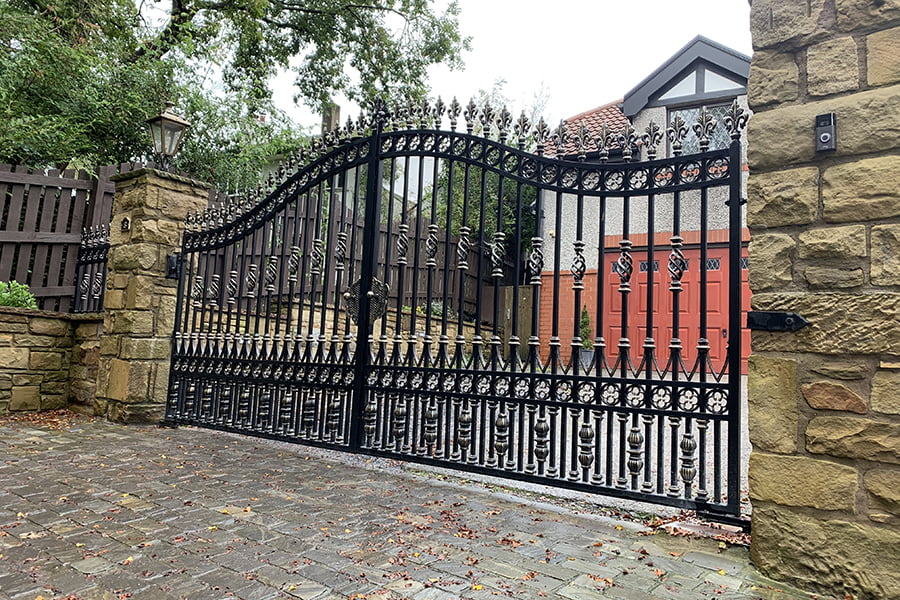
An automatic driveway gate can swing or slide, and that choice changes the entire job. A swing gate often costs less when the driveway is level, wide, and open enough for the panels to move inward. A sliding gate usually costs more because it needs a track, rollers, guide posts, or a cantilever system.
Material pushes the price in another direction. Aluminum is lighter, which helps the motor work with less strain. Steel feels stronger but needs proper coating to fight rust. Wood gives warmth, but it moves with moisture and needs more care in humid areas like the Southeast.
Site conditions can hit the budget harder than the gate itself. A flat suburban driveway in Ohio is not the same job as a sloped entrance in Northern California or a long rural drive in Texas. Trenching for power, setting deep posts, adding drainage, or cutting concrete can turn a simple quote into a serious project.
The counterintuitive part is that the prettiest gate is not always the expensive part. Labor and correction work often eat more money than the visible materials. A modest gate installed with clean geometry beats an ornate gate forced onto a poor opening.
How Electric Gate Installation Labor Shapes the Final Price
Electric gate installation requires more than attaching a motor to a panel. The installer has to confirm the gate moves freely by hand before automation begins. A motor should never compensate for a bad hinge, a leaning post, or a dragging frame.
Electrical work adds another layer. Many systems need a dedicated power run, weather-safe connections, and a protected control box. Solar can work in the right location, but shade, gate weight, and daily use matter. A shaded driveway under mature trees may not be a good solar candidate, even if the sales page makes it sound easy.
Access control changes the labor picture too. A remote-only system is simple. A keypad, vehicle loop, smartphone control, intercom, camera, and exit sensor create more wiring, testing, and setup time. HomeGuide notes that advanced security features such as intercoms, keypads, and smartphone control can raise automatic gate projects toward the upper end of the range.
A good installer spends time on boring details because those details protect the motor. Stops, hinges, brackets, conduit paths, and sensor placement rarely impress guests, but they decide whether the system lasts. The work nobody notices is often the work you paid for.
Security Benefits That Matter in Everyday Home Life
Security is not only about stopping a stranger at the curb. It is also about slowing down confusion, reducing unwanted access, and making your property feel less open to random movement. A gate changes behavior before it changes crime risk, and that shift can be powerful.
How Driveway Security Upgrades Control Access Before Trouble Starts
Driveway security upgrades work best when they remove easy opportunities. A closed gate tells unknown drivers, solicitors, and wandering vehicles that the driveway is private. That signal matters more than many homeowners expect.
For families with children or pets, the benefit feels more personal. A gate can help keep a dog from reaching the road or stop a small child from wandering toward traffic while someone unloads groceries. It does not replace supervision, but it adds a physical pause where open pavement used to invite movement.
Packages and service visits also become easier to manage. A keypad code can let a trusted contractor enter during a planned window. A camera intercom can let you speak to a delivery driver without opening the house door. The gate becomes a filter instead of a wall.
The unexpected insight is that a gate often improves manners as much as security. People who might casually pull into an open driveway usually stop when they meet a controlled entrance. Boundaries work best when they are visible.
Why A Smart Gate Opener Is Not A Security System By Itself
A smart gate opener adds convenience, but it should not carry the full security plan. Phone controls, alerts, and app access help you manage entry, yet they still depend on strong hardware, safe wiring, and sensible code habits.
Weak access codes create real risk. A homeowner who gives the same four-digit code to every delivery driver, landscaper, neighbor, and guest has not gained much control. Temporary codes, scheduled access, and deleted old users matter more than flashy app screens.
Cameras and lighting fill another gap. A gate that opens into a dark driveway gives you less information than a simpler system paired with motion lighting and clear video. The best setup lets you see, speak, decide, and record without making every visit feel like a production.
UL 325 safety rules also belong in this conversation. Automatic gate systems need proper protection against entrapment, and many installations require external sensors or similar devices. DASMA guidance explains that most automatic gates need external entrapment protection sensors, which is why experienced dealers and installers matter.
Choosing the Right Gate Type for Your Property
The right gate is the one that fits your land, not the one that looks best in a showroom photo. Driveway width, slope, wind, snow, drainage, street setback, and daily traffic all shape the decision. A smart plan starts with movement, not style.
When Swing Gates Make The Most Sense
Swing gates feel classic because they frame the entrance with a clean, residential look. They suit many suburban homes where the driveway is level and there is enough room for the panels to open inward without blocking parked cars.
Single swing gates can work for narrower openings, while double swing gates reduce the load on each motor. Double gates also open faster because each panel travels a shorter arc. That can matter when the entrance sits near a busier road and you do not want to wait with your vehicle exposed.
Wind changes the equation. A solid panel can act like a sail in open areas across the Midwest or plains states. A lighter aluminum gate with spaced pickets may place less stress on the operator than a wide, solid privacy panel.
The design lesson is plain: the motor should not fight the property. When a swing gate has enough room, clean hinges, and the right panel weight, it can feel natural. When forced into a tight or sloped drive, it becomes a daily compromise.
When Sliding Gates Beat A Swing Design
Sliding gates earn their place when space is tight near the entrance. They do not need a large opening arc, so they can work better when vehicles park close to the gate or when the driveway rises sharply behind it.
Track sliding gates need a clean, level path. That sounds simple until leaves, gravel, ice, or mud enter the picture. In snowy states, track maintenance can become part of winter life, and some homeowners underestimate that chore until the first storm.
Cantilever gates avoid ground tracks by carrying the gate from support posts and rollers. They can handle uneven surfaces better, but they need extra side room because the gate includes a counterbalance section. That added length can surprise homeowners with narrow side yards.
A sliding gate can be the better security choice for some properties because it is harder to push open when built well. Still, the added structure must be planned carefully. Poor alignment on a sliding system does not forgive much.
Long-Term Value, Maintenance, And Smart Planning
A gate should not be judged only by installation day. The better question is how it behaves after three summers, two winters, hundreds of deliveries, and thousands of open-close cycles. Long-term value comes from proper design, honest maintenance, and equipment that matches real use.
How Maintenance Protects Your Investment
Every automatic system needs care. Hinges, rollers, chains, arms, brackets, photo eyes, batteries, and control boards all live outside. Heat, cold, rain, dust, insects, and vibration slowly test the installation.
Annual service is a sensible baseline for most homes. Heavier use may call for more frequent checks, especially on long driveways, shared entrances, or homes with daily service traffic. Maintenance should include force testing, sensor checks, hardware inspection, lubrication where appropriate, and a look at drainage around posts and motors.
Homebuilding guidance from gate professionals also points to routine cleaning, material care, and yearly servicing for automatic mechanisms, with more frequent servicing for heavy-use gates. The principle applies well to U.S. homes too: automation lasts longer when the mechanical parts stay clean, balanced, and inspected.
The overlooked habit is listening. A gate that groans, shudders, drags, or closes unevenly is asking for attention. Small problems often speak before they break.
How Driveway Security Upgrades Affect Home Value And Daily Comfort
Driveway security upgrades can support curb appeal, privacy, and buyer perception, especially in neighborhoods where controlled entries are common. A clean gate, matched fencing, and tidy access controls can make the property feel more finished from the street.
Value depends on the buyer, though. Some people love the privacy. Others worry about maintenance. A gate that looks heavy, outdated, or unreliable can feel like a future bill instead of an upgrade. Quality and design restraint matter.
A smart gate opener can also improve daily comfort in ways that do not show up in an appraisal. Opening the gate from the car during rain, letting family in without handing out keys, and checking access from your phone all reduce small friction. Those tiny moments add up.
The strongest return comes from balance. Spend enough for safety, durability, and proper access control, but avoid turning a normal residential entrance into a commercial checkpoint. A home should feel protected, not tense.
Conclusion
A good automatic entrance is a system, not a single product. The smartest homeowners start by studying the driveway, the traffic pattern, the power source, and the people who will use the gate every day. Style comes after that.
A realistic budget should leave room for labor, safety devices, access controls, and future service. Gate automation costs can look high at first, but the right setup gives back through privacy, cleaner access, stronger boundaries, and fewer daily annoyances. The wrong setup gives back headaches.
Do not buy the motor before understanding the gate. Do not choose the panel before checking slope, wind, clearance, and wiring. Do not treat safety sensors as optional extras when they protect people, pets, vehicles, and your liability.
Your next step is simple: walk your driveway like an installer would, note the slope, width, power access, parking patterns, and entry needs, then ask for quotes that explain the full system rather than one shiny number. Build the entrance once, build it with care, and let it work quietly for years.
Frequently Asked Questions
How much does an automatic driveway gate cost for a typical home?
Most homeowners should expect a few thousand dollars for a standard installed system. The price rises with wider openings, heavier materials, sliding designs, electrical work, keypads, intercoms, cameras, and site prep. Custom entrances can cost far more than basic residential setups.
Is electric gate installation worth it for home security?
It can be worth it when the gate controls access, improves privacy, and fits the property layout. The best results come when the gate works with lighting, cameras, strong codes, and safe visitor management instead of acting as the only security measure.
What is the cheapest type of automatic driveway gate?
A simple swing gate with a basic opener is often the lowest-cost automated option when the driveway is level and has enough room. Costs climb when the gate needs custom fabrication, trenching, dual motors, solar support, or advanced access controls.
Does a smart gate opener work during a power outage?
Many systems can work during an outage if they include battery backup or a manual release. Homeowners should ask how the gate opens in emergencies, where the release is located, and whether backup power supports normal use or limited operation.
Are sliding gates better than swing gates for small driveways?
Sliding gates often suit small or steep driveways because they do not need a wide inward swing path. They still need side clearance, proper alignment, and clean travel space. A site inspection is the safest way to choose between both designs.
What safety features should an automatic gate have?
A safe system should include proper entrapment protection, photo eyes or approved sensors, force settings, warning signs, emergency release access, and careful placement of controls. The exact setup depends on gate type, movement direction, and local code expectations.
How long does a driveway gate opener usually last?
A quality opener can last many years when matched to the gate weight and maintained on schedule. Poor alignment, overloaded motors, water exposure, weak posts, and skipped service shorten its life. The gate must move smoothly before automation is added.
Can I install an automatic driveway gate myself?
Some light-duty opener kits are sold for DIY use, but full installations often need concrete work, electrical planning, safety devices, and precise alignment. A professional installer is usually the safer choice for heavy gates, sliding systems, or any setup near public access.