A plain window can make even a well-kept home look unfinished from the curb. The right exterior shutters add depth, balance, and character, but only when they fit the house instead of fighting it. For many U.S. homeowners, exterior shutters are one of those curb appeal upgrades that seem simple until the measuring tape comes out. Width, height, siding type, fasteners, color, and local weather all matter more than most people expect. A shutter that looks charming online can look awkward on a real ranch home in Ohio or a coastal cottage in North Carolina if the scale is wrong. That is why good planning beats impulse buying every time. Homeowners comparing home exterior improvement resources should think beyond decoration and treat shutters as a design choice with real installation consequences. Done well, they frame your windows like trim on a picture. Done carelessly, they look like plastic rectangles stuck to the siding after the fact.
Choosing Exterior Shutters That Match Your Home’s Architecture
Good shutter choices begin before you pick a color. The first real decision is whether your home can carry shutters naturally, because not every window shape or house style benefits from them in the same way.
Why Proportion Matters More Than Color
Proportion decides whether shutters look intentional or fake. Each shutter should usually appear wide enough to cover half the window if it were able to close. Even if you install decorative fixed shutters, that visual rule still matters because your eye knows when something feels wrong.
A common mistake is buying narrow shutters for wide windows because they cost less. On a suburban two-story home, that shortcut can make the whole front elevation look thin and underfed. The house does not need more decoration at that point. It needs better scale.
Older homes show this lesson clearly. A Colonial in Massachusetts with tall double-hung windows can handle long louvered shutters because the window proportions are upright. A low-slung ranch in Arizona often looks better with wider board-and-batten shutters or no shutters at all. The house shape sets the rules.
Color enters later. A sharp black shutter can look elegant on white siding, but if the shutter is too short or too skinny, the color only makes the mistake easier to see. Size speaks first.
Matching Style to Regional Home Types
American homes carry strong regional cues. A shutter that looks right on a Charleston-style home may feel forced on a split-level house in suburban Michigan. Style should follow the building, not a trend board.
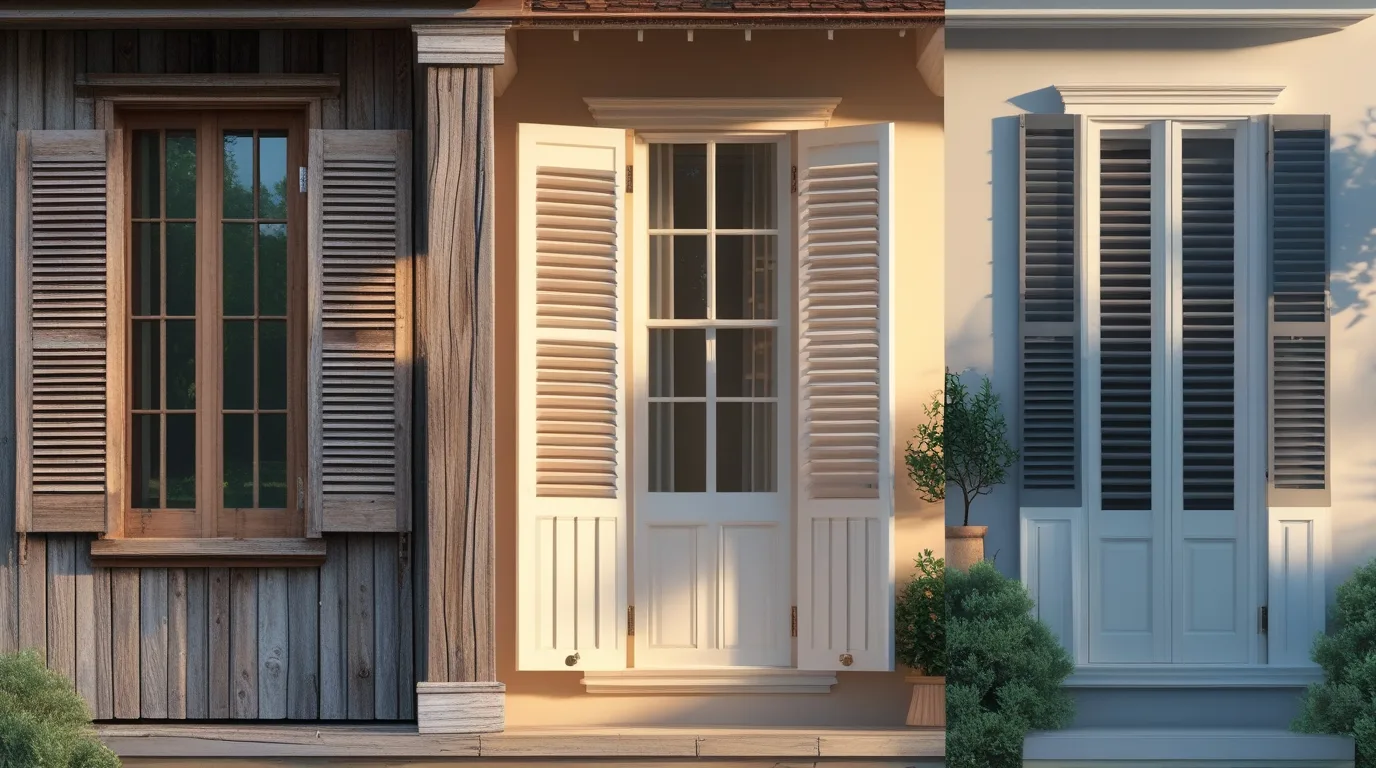
Raised-panel shutters tend to suit Colonial, Federal, and traditional brick homes. They have a formal look that pairs well with symmetrical windows and centered front doors. Louvered shutters feel lighter and often work on Cape Cod, cottage, and coastal homes where airflow and shade are part of the visual story.
Board-and-batten shutters bring a more relaxed texture. They make sense on farmhouse, Craftsman, cabin, and rustic homes because the vertical boards feel connected to woodwork and hand-built details. Used carefully, they can warm up vinyl siding without making the house look like it is wearing a costume.
Here is the counterintuitive part: the “prettiest” shutter is not always the best one. A simple shutter that respects the house will beat a fancy one that ignores it. Taste starts with restraint.
Window Shutter Installation Steps That Prevent Crooked Results
A beautiful shutter can still look bad if it sits crooked, floats too far from the window, or leaves ugly holes in the siding. Installation is where style turns into workmanship, and small errors become visible from the street.
How to Measure Before Drilling
Accurate measuring saves you from nearly every ugly installation problem. Measure the height of each window trim area separately, even when the windows appear identical. Houses settle, trim shifts, and replacement windows do not always match the original openings.
For decorative shutters, height should usually align with the window frame or trim, not the glass alone. Width depends on the window size and style, but the visual goal remains simple: the shutter should look like it belongs to that opening. Guessing from a product photo is where trouble begins.
Marking matters as much as measuring. Use a level, pencil, and painter’s tape to test placement before drilling. Step back to the street or driveway and look at the whole wall, not one window at a time. Your eye catches imbalance from distance better than it does from a ladder.
One practical trick helps on multi-window walls. Make a cardboard spacer or wood guide so each shutter sits the same distance from its window trim. It sounds low-tech because it is. It also works.
Fasteners, Siding, and Weather Gaps
Different wall surfaces demand different fastening choices. Vinyl siding, brick, fiber cement, stucco, and wood clapboard do not behave the same under a drill bit. Treating them alike creates loose shutters, cracked surfaces, or water problems later.
On vinyl siding, you need room for movement because the panels expand and contract with temperature swings. Tightening fasteners too hard can pinch the siding and cause warping. On brick, masonry anchors and proper pilot holes matter because the wall will not forgive sloppy drilling.
Wood siding gives you a more forgiving surface, but it still needs care. Holes should be placed cleanly, and exposed areas should be sealed where needed to help keep moisture out. In humid states like Georgia or Louisiana, small water paths can become rot problems faster than homeowners expect.
Do not press shutters so tight against the wall that water gets trapped behind them. A small drainage gap helps the surface dry after rain. That tiny space is not a flaw. It is one of the quiet details that keeps the job from aging badly.
Material Choices That Affect Maintenance and Long-Term Appearance
The material you choose decides how your shutters weather, clean, fade, and hold their shape. Many homeowners shop by price first, but the better move is to shop by climate and maintenance tolerance.
Vinyl Shutters for Budget-Friendly Updates
Vinyl shutters are common because they are affordable, light, and easy to install. For a homeowner refreshing a starter home or rental property, they can offer a quick lift without a major renovation budget. They also come in many sizes and colors, which makes matching existing trim easier.
The weakness is not always obvious at first. Cheap vinyl can fade under strong sun, especially on south-facing walls in states like Texas, Florida, and Nevada. Dark colors may show heat stress sooner than softer tones. A shutter can still be attached firmly yet look tired because the surface has lost its finish.
Higher-quality vinyl performs better, but it still has a molded look. That may be fine on newer vinyl-sided homes. On older wood or brick homes, the texture can feel too flat unless the color and size are chosen with care.
There is nothing wrong with choosing vinyl when the budget calls for it. The mistake is expecting the lowest-cost option to age like painted wood or composite. Spend where the front elevation matters most, then simplify on less visible sides if needed.
Wood, Composite, and PVC Options
Wood shutters bring depth that imitation materials try hard to copy. Cedar, redwood, and other exterior-grade woods can look beautiful when painted or stained well. They suit historic homes, Craftsman bungalows, and houses where real material texture carries the design.
Wood also asks for commitment. Paint can peel, joints can open, and moisture can punish neglected edges. In snowy northern climates, freeze-thaw cycles add another layer of stress. A homeowner who hates repainting should think twice before choosing wood for every window.
Composite and PVC shutters sit in the middle. They often cost more than basic vinyl but less maintenance than wood over time. Good composite shutters can hold crisp profiles, resist rot, and take paint well. That makes them useful for homeowners who want a more substantial look without constant upkeep.
The hidden value is consistency. A composite shutter on a sunny front wall and a shaded side wall will often age more evenly than cheaper materials. That matters when you plan to stay in the house long enough to notice.
Finishing Details That Turn Shutters Into Real Curb Appeal
Once the shutters are installed, the final result depends on details most people overlook. Hardware, spacing, trim relationships, and color balance decide whether the project feels polished or halfway finished.
Using Shutter Mounting Hardware the Right Way
Shutter mounting hardware does more than hold panels in place. It changes the visual weight of the whole installation. Hinges, holdbacks, screws, and caps can make decorative shutters feel closer to working shutters, which gives the exterior more depth.
Fake hardware can still work if it is used honestly. A black hinge detail on board-and-batten shutters can add character to a farmhouse-style exterior. On a formal brick Colonial, cleaner hardware may look better because the architecture already has enough structure.
Spacing is where many installations lose quality. Shutters should sit close enough to the window trim to feel connected but not so tight that they crowd the frame. Consistent gaps across the entire front of the home matter more than expensive hardware.
Hardware color should connect to another exterior feature. Black shutters with black lanterns, bronze hardware with warm brick, or white hardware with pale trim can pull the front together. Random metal finishes make the wall feel busy.
Color Choices That Raise or Lower Home Value
Color can either sharpen the house or make it feel dated. A shutter color should work with the roof, siding, trim, front door, and even the driveway tone. Homes are not flat design boards. They sit in real light, beside lawns, trees, brick, stone, and neighboring houses.
For safer curb appeal upgrades, many U.S. homeowners choose black, deep green, navy, charcoal, white, or warm brown. These shades usually survive trends better than bright accent colors. A bold red or blue can work, but it needs a house with enough character to support it.
Test samples outside before committing. Paint chips seen indoors lie because interior light softens everything. A color that feels rich in a store can look harsh in afternoon sun on white siding. Tape samples near the actual window and check them morning, midday, and evening.
The unexpected truth is that shutters do not always need to stand out. Sometimes the best color is only two or three shades away from the siding because it adds shadow without shouting. Quiet contrast often looks more expensive than loud contrast.
Conclusion
A good shutter project rewards patience more than speed. The homeowner who measures twice, studies the house style, chooses the right material, and respects the wall surface gets a result that feels built in, not added on. That difference matters every time someone pulls into the driveway. Exterior shutters can sharpen a plain facade, soften a large wall, and give older windows a stronger frame, but they cannot rescue poor proportion or careless drilling. Start with the windows you see first from the street. Check scale, test color, and choose hardware that supports the home’s character instead of competing with it. Then install with the same care you would bring to trim, because from the curb, that is exactly how the eye reads it. Treat shutters as part of the architecture, and your home will look more settled, more intentional, and far more complete.
Frequently Asked Questions
What size exterior shutters should I buy for my windows?
Choose shutters that match the window height and appear wide enough to cover about half the window if closed. Decorative shutters still need believable proportions. Measure each window separately, including trim, because older homes often have small differences from one opening to another.
Are vinyl shutters good for long-term outdoor use?
Vinyl shutters can work well for budget-conscious projects, especially on newer homes with vinyl siding. Better-quality options resist fading and warping longer. In harsh sun or extreme heat, cheap vinyl may lose color faster, so climate should guide the final choice.
Can I install shutters on brick without damaging the wall?
Brick can handle shutters when you use the right masonry bit, anchors, and drilling technique. Holes should go into the brick or mortar based on the fastener system. Rushing the job can crack masonry or leave loose anchors that fail over time.
Should shutters be lighter or darker than house siding?
Darker shutters create stronger contrast and often make windows look sharper. Lighter shutters can soften the exterior and work well on darker siding. The best choice depends on roof color, trim, brick, stone, and the amount of sunlight the front of the house receives.
Do all windows on a house need shutters?
Not every window needs shutters. Some large picture windows, bay windows, and closely spaced windows look better without them. Use shutters where they look natural and balanced. Forcing them onto every opening can make the exterior feel crowded.
What shutter style works best for farmhouse homes?
Board-and-batten shutters usually suit farmhouse homes because their vertical boards feel casual, sturdy, and connected to rustic trim details. Simple colors like black, white, deep green, or stained wood often work better than ornate panel styles on this type of exterior.
How much space should be between shutters and window trim?
Keep the gap consistent across all windows. Many installations look best with shutters placed close to the outside trim without touching or crowding it. The exact spacing depends on shutter style, siding profile, and hardware, but uneven gaps are what make the work look careless.
Can shutters improve home curb appeal before selling?
Well-chosen shutters can improve curb appeal before listing a home, especially when the front elevation feels flat. Buyers notice clean proportions, fresh color, and tidy installation. Poorly sized or faded shutters can have the opposite effect, so replacement only helps when the details are right.