
A home can be clean, expensive, and full of good pieces and still feel off. That frustration usually has little to do with taste and everything to do with arrangement. Rooms fall flat when the eye has nowhere to rest, when furniture crowds the path, or when every surface tries to make a point at once.
That is why classy layout updates matter more than another impulse purchase. They change how your home works before they change how it looks, and that order is what gives a room its calm authority. If you want ideas that sharpen the visual tone without turning your place into a showroom, start with the kind of thoughtful design guidance shared through trusted home styling insights and then bring those choices down to floor level, where real life happens.
A refined room does not announce itself. It settles in. You notice the ease first: the chair that sits exactly where it should, the lamp that softens rather than shouts, the negative space that makes the whole room breathe. Good layout is not decoration wearing a fancy coat. It is discipline, restraint, and a little nerve. You remove what weakens the space, then you give the right pieces enough room to speak.
Classy Layout Updates Begin With What the Room Is Trying to Do
A polished home never starts with styling tricks. It starts with function, because the fastest way to cheapen a room is to make it inconvenient. When you know how a room should behave, every placement decision gets sharper and the visual noise begins to drop on its own.
Read the traffic pattern before you touch the furniture
Most people arrange a room by staring at the walls. That is the wrong starting point. You need to read the movement first: where people enter, where they pause, where they turn, and where they naturally cut across the floor instead of following the path you imagined. A room that fights movement always feels less expensive than it is.
The smartest first move is to walk the room empty-handed and notice your own habits. You will spot dead corners, blocked routes, and chairs that force awkward sidesteps. This is where elegant room flow begins, not with a trendy chair or a dramatic vase. A home feels refined when it lets you move through it without friction.
There is a counterintuitive truth here. Filling empty space often makes a room feel smaller, but clearing the wrong path can make it feel larger without changing a single piece. In a narrow living room, for example, shifting a side chair six inches away from a main walkway can do more than replacing the entire coffee table. Small spatial corrections carry more power than most people expect.
Build the room around an anchor, not around the walls
Every strong room needs one visual anchor. That might be a sofa, a dining table, a bed, a fireplace, or a large window. Without an anchor, the furniture drifts. The room starts to look temporary, as if everything is waiting for a better plan.
Once the anchor is clear, place supporting pieces in conversation with it rather than pinning them to the perimeter. That habit of pushing everything against the walls rarely makes a room feel grand. It usually makes the middle feel abandoned. Pulling seating inward, even slightly, creates connection and shape.
A living room with two sofas facing each other across a modest rug often feels more composed than a bigger room with scattered seating and oversized gaps. The same rule applies in bedrooms. A bed centered with balanced breathing room on both sides brings order before any bedding enters the picture. Layout is the skeleton. Style only looks convincing when the bones are right.
A Refined Home Look Depends on Restraint in Color, Light, and Visual Weight
Once the structure makes sense, the next layer is emotional. This is where many homes lose the plot. People keep adding beauty piece by piece, but they never check whether those pieces are pulling together or dragging the room in four directions at once. Calm design takes editing, and editing is a harder skill than buying.
Keep the palette controlled so the room can exhale
A room does not need to be colorless to feel elegant. It needs discipline. The most inviting spaces usually lean on a narrow palette and then create depth through texture, shadow, shape, and material contrast. That is what makes refined home decor feel settled instead of staged.
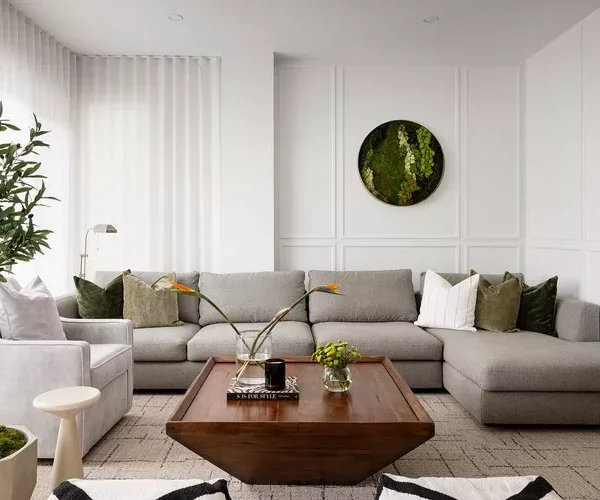
Think of a sitting room built from warm white walls, a stone-toned rug, walnut wood, brushed brass, and one restrained accent color in a cushion or artwork. Nothing is loud, yet nothing is dull. The room holds attention because it has quiet variation. That matters more than a rainbow of good intentions.
One mistake shows up everywhere: people spread accent colors evenly through a room as if balance means sameness. It does not. Better rooms have weight shifts. A darker chair in one corner, a soft lamp glow on the other side, and a grounded coffee table in the middle can make the whole space feel intelligent. Uniformity is not the same as harmony.
Layer lighting at different heights or the room will never feel finished
Overhead lighting does a job. It does not create atmosphere. If a room depends on a single ceiling fixture, it will almost always feel flat at night, no matter how much money went into the furniture. The eye reads depth through light contrast, and flat light erases that depth.
Good rooms use lighting low, mid, and high. A table lamp near a sofa brings intimacy. A floor lamp gives height without glare. A small wall sconce or picture light adds a softer edge. That mix helps timeless interior style land in a believable way because it lets surfaces, fabrics, and shapes reveal themselves gradually.
You can test this in ten minutes. Turn off the ceiling light and switch on two lamps at different heights. The room will likely feel more expensive on the spot. Not brighter. Better. That difference matters. A refined home is not trying to flood every inch with visibility. It is trying to create mood, depth, and visual direction.
Storage, Spacing, and Editing Separate Mature Rooms From Cluttered Ones
This is the section most people resist, because it asks for subtraction. Yet subtraction is where rooms stop looking like collections of objects and start looking like places with a point of view. A graceful layout is rarely built by adding ten more touches. It is built by removing six that were in the way.
Leave more negative space than feels comfortable at first
The instinct to fill every blank area comes from nerves. People see an empty stretch of wall, an open shelf, or a quiet corner and assume the room is unfinished. In truth, negative space is what lets the stronger choices carry weight. Without it, every item competes at the same volume.
This is where smart space planning earns its keep. A console table does not need decor spread across every inch. A bookshelf does not need each shelf packed. A corner does not need a plant simply because it exists. Empty space is not a failure of design. It is part of the design.
The same idea applies to furniture spacing. Pieces that sit too close together feel cramped, but pieces that float too far apart feel emotionally disconnected. You want enough distance to give each object shape, then enough closeness to keep the room coherent. That balance is felt more than calculated, and it gets easier once you stop fearing open areas.
Hide the practical clutter before you style the visible surfaces
You cannot decorate your way out of daily mess. That sounds obvious, yet people keep buying baskets, trays, candles, and decorative boxes while cords spill from outlets and paperwork colonizes the sideboard. Practical clutter destroys polish because it tells the eye the room has no rules.
A better approach is ruthless containment. Put charging stations where they disappear. Give papers one closed home. Store remote controls in a drawer, not in a decorative bowl that still looks busy. In entryways, use a slim cabinet or closed bench so shoes stop becoming part of the visual story. This is the unglamorous side of refined home decor, and it is one of the most important.
There is a reason hotel suites often feel calmer than bigger homes. They are not packed with superior furniture. They simply protect the eye from everyday disorder. Once the practical layer is handled, styling begins to matter again. Before that, styling is lipstick on chaos.
Finishing Touches Work Only When They Support Rhythm, Memory, and Personality
By this point, the room should function well, move well, and breathe well. Now the emotional character can come forward. This is where you keep the home from becoming cold. Refinement without personality feels sterile, and nobody wants to live inside a design mood board.
Repeat shapes and materials so the room feels intentional
A strong room has rhythm. You might see it in curved chair backs echoing a rounded mirror, in dark wood repeated through two or three pieces, or in linen softening a room that also includes stone and metal. These repetitions create connection without turning the room into a matching set.
That is also how elegant room flow carries into the details. When the eye notices a material or shape reappearing at a measured pace, the room feels composed. Not rigid. Not themed. Composed. A black frame on the wall can speak to black legs on a side table, which can quietly link to a small lamp base across the room.
What matters is restraint. Repetition should feel discovered, not announced. If every object shouts the same finish, the room loses tension. You need a thread, not a uniform. That small difference is where a home starts to feel personal rather than purchased all at once from a showroom floor.
Use fewer personal pieces, but make them land harder
The last layer should say something true about you. Not everything. One of the most common mistakes in home styling is trying to display a full biography in every room. Family photos, travel souvenirs, inherited objects, books, art, and hobbies all deserve space, but not equal space at the same time.
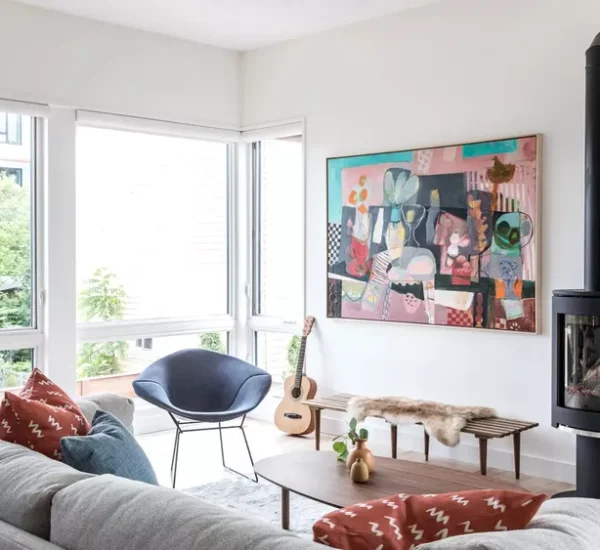
Selective display is what gives smart space planning an emotional payoff. A single framed black-and-white photo near a reading chair can say more than a crowded gallery wall assembled without hierarchy. One handmade ceramic bowl on a console can hold more presence than six unrelated accessories lined up out of habit.
The unexpected insight is this: the fewer personal objects you show, the more intimate the room can feel. Scarcity creates significance. Your home should not read like storage with better lighting. It should read like judgment, memory, and taste working together. That is what turns design into identity.
A refined home is not built in a shopping sprint. It is built by noticing what your rooms are trying to become, then giving them structure, calm, and enough honesty to feel lived in. The goal is not perfection. The goal is alignment between how your home looks, how it moves, and how it supports your life when nobody is watching.
That is where classy layout updates prove their value. They are not cosmetic tweaks for guests. They are the quiet decisions that make a sofa placement feel natural, a corner feel lighter, and a room feel finished without feeling forced. When you get the layout right, everything else stops working so hard.
Start with one room this week. Clear the path, cut the clutter, pull the furniture into a stronger conversation, and let the empty space do some of the talking. A home does not need more stuff to look refined. It needs better judgment, applied with courage.
Frequently Asked Questions
What are the best classy layout ideas for a small living room?
Focus on movement first, then scale. Keep one clear traffic path, choose furniture with visible legs, and avoid pushing every piece against the wall. A small room feels sharper when each item has a reason to stay.
How do you make a home look refined without buying new furniture?
Rearranging often does more than replacing. Pull seating into better groupings, clear crowded surfaces, improve lamp placement, and remove anything that interrupts the room’s visual balance. Editing beats shopping more often than people admit.
How can I create elegant room flow in an open-plan home?
Use rugs, lighting, and furniture groupings to define zones without blocking movement. Keep sightlines open across the main path, and repeat one or two materials through each area so the whole space feels connected instead of chopped up.
What colors work best for refined home decor?
Soft neutrals, earthy woods, muted stone tones, and one controlled accent color tend to hold up well. The trick is not picking “fancy” colors. It is limiting the palette enough that texture and shape get room to matter.
Why does my room still feel cluttered after decorating it?
Decoration cannot solve weak storage or poor spacing. Visible cords, piled paperwork, crowded shelves, and too many small accessories create stress fast. Fix the functional clutter first, then style what remains with far more restraint.
How important is lighting in timeless interior style?
It is one of the biggest factors. A room with layered lighting almost always feels more finished than one with a single bright ceiling fixture. Use a mix of table lamps, floor lamps, and soft accent lighting to create depth.
What is the biggest mistake people make with smart space planning?
They treat every empty spot as a problem that needs filling. Open space helps the eye rest and gives stronger pieces more impact. A room starts to feel mature when you stop decorating every corner out of anxiety.
How often should you update your home layout?
Review it whenever your routines change or a room starts feeling harder to use. Many layouts need a reset every season or two, not because trends changed, but because daily habits did. Good design stays responsive.